

How Fitness Watches Measure VO₂ Max and What It Means for Your Health
We often notice that climbing stairs becomes more difficult with age. Or walking uphill causes shortness of breath after just a couple of minutes. This is not always due to excess weight or poor fitness. It is often related to how efficiently the body uses oxygen during exercise.
VO₂ max is a number that shows how efficiently your heart and lungs work when you're active. It helps you understand how your body handles physical effort today, and how it might respond to stress in the future.
In the past, this was something only athletes tracked. Now, many fitness watches can estimate your VO₂ max. And the good news: you don’t need major lifestyle changes to improve it. Even small shifts in your weekly activity can make a difference.
If you’re unsure about your fitness level or want to get personalized advice, Buckhead Primary and Urgent Care Clinic can help. Our team can assess your endurance, recommend safe workouts, and support you as you build strength and stamina over time.
How to Find Out Your VO₂ Max Using a Watch
Fitness watches show your approximate VO₂ max level. The accuracy of the result depends on how you move during training and how often the device receives data.
Important. Watches do not measure VO₂ max directly. They calculate it based on the heart rate response to exercise. The algorithm compares your metrics with a large database of people whose VO₂ max has been measured in a laboratory.
Therefore, the value on the watch is only an estimate, not an accurate medical test.
What Affects the Accuracy of VO₂ Max in Watches
Two conditions are important for the indicator to be closer to your actual level.
Training at a Steady Pace
The watch only uses data obtained during steady walking or running. Home steps and strength training are not suitable for calculation.
It is better to set aside 15-20 minutes two or three times a week for walking or light running at a steady pace.
Reliable Heart Rate Data
For the watch to accurately assess your workload, it is important that the sensor reads your heart rate without interruption. Several simple conditions help to achieve this:
- the watch fits snugly against the skin
- the sensor is clean
- the wrist is warm, especially in cold weather
- there are no sudden arm movements
If the heart rate is read intermittently, the watch will not assess the load correctly and the VO₂ max value will change randomly.
When the Watch Readings are Inaccurate
The watch only uses data from aerobic exercise at a steady pace. If the conditions are different, the VO₂ max value may be unreliable.
- Cold Weather. In cold weather, the skin cools down, blood vessels constrict, and it becomes more difficult for the sensor to read the heart rate. This reduces accuracy.
- Strength Training. Lifting weights increases heart rate, but not in the way the watch expects. It won’t use this data to update your VO₂ max.
- Inconsistent Workouts. If you’re new to training or coming back after a break, the watch needs time to learn your normal response to exercise. Until then, the estimate may be lower than your actual fitness level.
- Low Effort. If you’re walking too slowly and your breathing doesn’t change, the watch doesn’t detect enough exertion. In that case, it won’t update the number at all.
Should You Track VO₂ Max More Than Once?
Yes. One reading doesn’t show the full picture. Watches calculate VO₂ max based on repeated workouts that follow a similar pattern. The more consistent your activity, the more reliable the estimate becomes.
How to Get Consistent Results
- walk or jog 2-3 times a week.
- choose approximately the same pace and conditions.
- look at the changes once a month, not after each workout.
This way, you will see real progress, not a random value after a day when the sensor was off or the strap was too loose.
How to Understand What Your VO₂ Max Values Mean
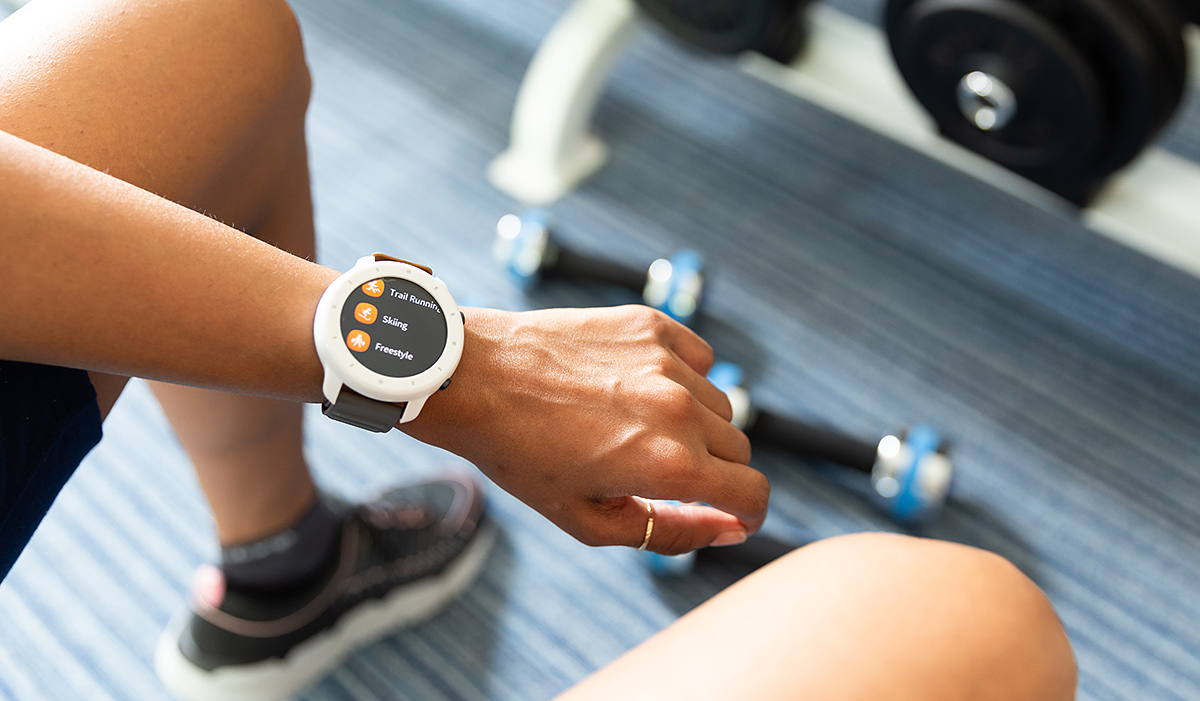
It is useful to look at VO₂ max not only as a number, but as a zone in which you are for your age. This gives you an understanding of how developed your aerobic fitness is compared to generally accepted benchmarks.
What matters most is the trend. If your VO₂ max is gradually increasing, your body is getting stronger and better at handling physical activity.
What to Consider a Good VO₂ Max
Look at your result taking into account your age. There are benchmarks for each age group. They help you understand how developed your endurance is now.
-
Use your age group as a reference point. These ranges help show how your endurance compares to general expectations:
- A score above average means your body handles effort well.
- A mid-range score suggests a healthy, functional level of fitness.
- A consistently low score may mean it’s time to increase your activity level or speak with a doctor, especially if you’ve noticed fatigue or shortness of breath.
If the indicator is gradually increasing, your heart and breathing are working more efficiently.
VO₂ Max Benchmarks by Age and Gender
These reference values are commonly used by sports medicine professionals in the U.S. to assess aerobic fitness. The numbers reflect how much oxygen your body can use during intense exercise, measured in milliliters per kilogram of body weight per minute (ml/kg/min).
Men
| Age | Low | Average | Above Average | Very High |
|---|---|---|---|---|
| 20–29 | below 42 | 42–47 | 48–53 | above 54 |
| 30–39 | below 40 | 40–45 | 46–51 | above 52 |
| 40–49 | below 36 | 36–42 | 43–48 | above 49 |
| 50–59 | below 32 | 32–37 | 38–43 | above 44 |
| 60–69 | below 29 | 29–34 | 35–39 | above 40 |
Women
| Age | Low | Average | Above Average | Very High |
|---|---|---|---|---|
| 20–29 | below 33 | 33–40 | 41–45 | above 46 |
| 30–39 | below 30 | 30–36 | 37–41 | above 42 |
| 40–49 | below 27 | 27–33 | 34–38 | above 39 |
| 50–59 | below 24 | 24–30 | 31–34 | above 35 |
| 60–69 | below 20 | 20–26 | 27–30 | above 31 |
Note. These numbers are general guidelines. Your ideal VO₂ max can depend on other factors like your health status, training history, and goals.
Exercises That Can Help Improve VO₂ Max
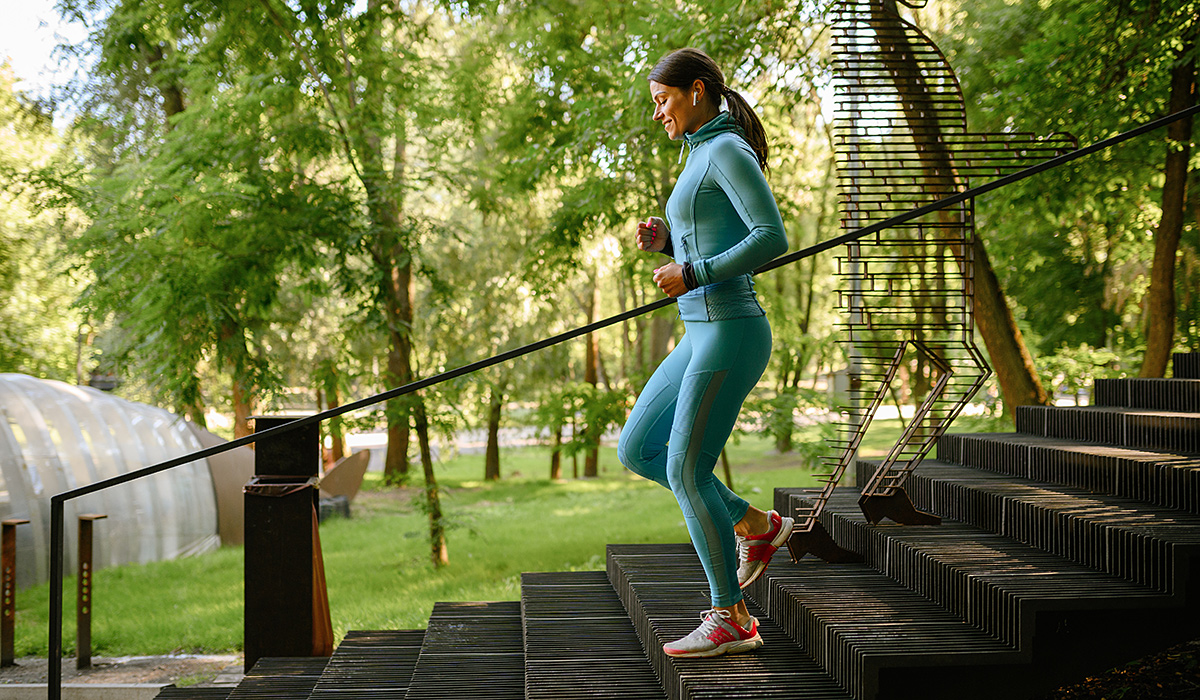
To increase VO₂ max, you need to exercise at a level where your breathing and heart rate become noticeably more active than in everyday life. You don't have to run fast or exhaust yourself. It's important to challenge your body a little several times a week.
Interval Sprints
This is a simple way to gradually build endurance. During a normal walk, choose a moment and sprint for one or two minutes so that your breathing becomes noticeably more active. Then walk at your normal pace again. Repeat this several times per workout.
This format gives your heart and breathing a small challenge and helps your body respond more quickly to exercise. After a few weeks, climbing stairs or walking uphill becomes easier, and shortness of breath occurs less often.
Pace Sections
If interval walking feels too demanding, choose a gentler progression. Begin at your normal pace, then increase your speed for five to eight minutes until speaking becomes slightly more difficult. After that, slow down and return to a comfortable rhythm.
With regular practice, your body will adapt to higher effort levels without becoming exhausted too quickly. Gradually, walking at a faster pace will feel easier, your endurance will improve, and climbing hills will require less strain.
Longer Moderate-Intensity Sessions
If you prefer lower-impact exercise, longer sessions at a moderate intensity can still be effective. This could mean walking uphill, swimming, cycling, or using an elliptical machine for 30 to 45 minutes. You should feel your breathing deepen, but you should still be able to hold a conversation.
The body learns to conserve energy. Over time, with the same level of activity, you will feel less tired, your endurance will increase, and everyday tasks will become easier.
Why VO₂ Max May Not Change
Many people start exercising more but don't see any changes in their metrics. Most often, the reason is not health, but how the training is conducted.
- The Pace Is Too Easy. Regular walking is good for your health, but it may not be enough to improve endurance. For VO₂ max to increase, part of the workout needs to push your heart and lungs more than your usual pace.
- Training isn’t Consistent. A few active days followed by a long break won’t give your body time to adapt. Two or three shorter sessions each week are often more effective than one long workout once in a while.
- The Intensity Starts Too High. Jumping into intense workouts too quickly can lead to fatigue without long-term progress. A gradual build-up works better and gives your body a chance to adjust.
- No Time to Recover. Sleep and stress levels play a big role in how your body responds to exercise. Without enough rest, your heart and muscles won’t get the chance to rebuild and strengthen.
- Not Enough Data from the Watch. If your heart rate readings are spotty or you’ve only logged a few workouts, the number may change randomly. It’s more useful to check progress monthly rather than expecting results right away.
Final Thoughts
VO₂ max is an important indicator, but it is not the only one used to assess heart and respiratory health. It helps to show the direction, but only a doctor who knows the specifics of your body and can take into account chronic conditions, activity level, and possible limitations can give you the full picture.
If you're looking for guidance that's specific to your needs, the team at Buckhead Primary & Urgent Care Clinic can help you start or adjust your fitness plan safely. Schedule a visit to get personalized support and take the next step toward building endurance and feeling better day to day.