
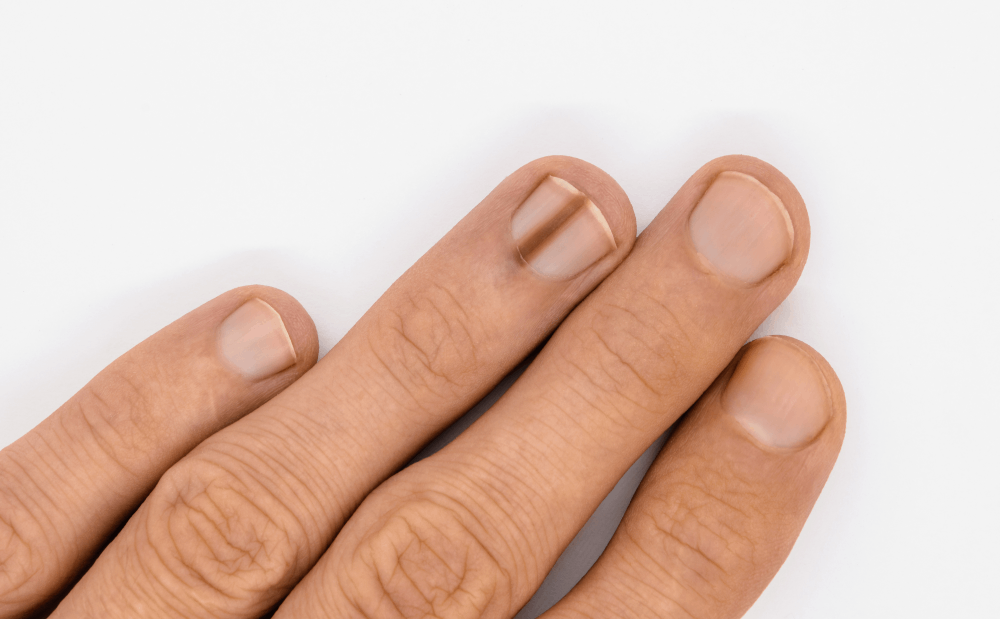
Is That Nail Stripe Safe? How to Spot Subungual Melanoma Early
In recent years, there has been more discussion about a rare type of skin cancer known as subungual melanoma, which is a melanoma that forms under a fingernail or toenail. Some experts connect this trend to the increasing popularity of gel manicures and the use of ultraviolet lamps in salons. This has raised concerns that frequent nail treatments might increase the risk of cancer developing beneath the nail. However, there is currently no strong scientific evidence confirming this link.
Studies do show that UV nail lamps can damage skin cells over time. However, a direct link between regular manicures and subungual melanoma hasn’t been established.
So why the increased attention? It’s likely that people are simply becoming more aware of changes in their skin and nails. With more frequent doctor visits and skin checks, more cases are being caught and caught earlier.
In this article, we’ll break down what subungual melanoma is, the signs to watch for, and when it’s time to see a doctor.
What Is Subungual Melanoma?
Subungual melanoma is a rare but dangerous form of skin cancer that starts under a fingernail or toenail. It comes from pigment-producing cells in the skin and can stay hidden for a long time.
In the early stages, it is easy to confuse this condition with something harmless, such as a bruise, a fungal infection, or even a mole. Unlike those, however, melanoma can slowly damage the nail, spread into the surrounding skin, and eventually reach the lymph nodes or even internal organs.
The tricky part is that it often grows slowly, so it doesn’t always seem urgent. But that doesn’t make it any less serious. If it’s not caught in time, it can spread and become life-threatening.
How to Spot Subungual Melanoma: Early Signs to Take Seriously
Subungual melanoma often goes unnoticed, especially if you regularly wear nail polish or get gel manicures. This is exactly what makes it dangerous. To detect it early, it is important to examine your nails without polish, especially the big toes, since this type of cancer most often appears there.
Watch for These Warning Signs
- A dark stripe under the nail—brown, gray, or nearly black
- The stripe runs from the base (cuticle) to the tip, as if it’s growing with the nail
- It slowly gets wider, darker, or the edges become blurry and uneven
- The color stays in place and doesn’t grow out like a regular bruise
- The skin around the nail may also start to darken
- The nail may change shape, lift, crack, or start to bleed
- You may feel pain or pressure under the nail
- Only one nail is affected. If it were caused by medication or trauma, multiple nails would usually be involved
Subungual melanoma can appear on both fingers and toes, but it often starts in places we don’t look at closely. That’s why taking a few minutes to check your nails can make a big difference.
And keep in mind that only a doctor can tell the difference between melanoma, a bruise, a fungal infection, or another condition. If you notice a new change or something that does not look typical, schedule a visit with a dermatologist. They may use a special magnifying device called a dermatoscope to examine the area more closely. The process is quick, painless, and can potentially save your life.
Who’s at Risk for Subungual Melanoma? Know the ABCDEF Rule
To help spot subungual melanoma early, doctors use a simple memory tool: the ABCDEF rule. Each letter points to a known risk factor or warning sign.
- A — Age: Most cases are diagnosed in people between 50 and 70 years old. It’s also more common in individuals with darker skin tones, including those of African, Asian, or Native American descent.
- B — Band: Look for a dark brown or black vertical stripe on the nail that's wider than 3 millimeters and has irregular borders.
- C — Change: Pay attention if the stripe gets wider, changes color, or starts to look different over time.
- D — Digit: The most commonly affected areas are the thumb, big toe, or index finger.
- E — Extension: If the pigment spreads to the skin around the nail, it could indicate Hutchinson’s sign, a red flag for melanoma.
- F — Family history: A personal or family history of melanoma or unusual moles (also called dysplastic nevi) may increase your risk.
Knowing this pattern can help you notice something serious before it gets worse. If you see even one of these signs, do not wait and make an appointment with a dermatologist.
Preventing and Catching Subungual Melanoma Early
There is no completely reliable way to prevent subungual melanoma, but checking your nails regularly can help you notice early changes, when treatment works best.
Here are a Few Simple Steps that Can Make a Difference
- Do a monthly self-check. Look closely at your nails for any dark streaks, color changes, or changes in shape.
- Remove polish before checking. Nail polish and gel can hide early warning signs, so it's best to inspect nails when they’re bare.
- Limit UV exposure. If you get gel manicures or pedicures, try to cut back on how often you use UV lamps.
- See a dermatologist regularly. Especially if you have risk factors or notice anything new or unusual with your nails.
Early detection is key. The sooner melanoma is found, the better the chances of successful treatment.
Can Gel Manicures Cause Subungual Melanoma?

Right now, there’s no clear scientific proof that gel manicures directly cause subungual melanoma. Some lab studies have shown that UV nail lamps can damage skin cells and even affect DNA—but so far, researchers haven’t found a direct link between regular gel manicures and nail cancer.
Even so, doctors still suggest being careful, especially if you get gel nails frequently and have been doing so for many years.
If gel manicures are part of your routine, here are a few easy ways to protect your skin:
- Apply sunscreen to your hands before your appointment.
- Wear fingerless gloves that leave just the nails exposed.
- Give your nails a break every couple of months to let them recover.
These simple steps can help reduce any possible risk, especially if you have sensitive skin or a family history of skin cancer.
How is Subungual Melanoma Treated?
Treatment for subungual melanoma depends on how far the cancer has progressed at the time of diagnosis.
In the early stages, surgery is usually the first treatment. In most situations, doctors can remove the tumor along with the nail and the tissue beneath it, and they can do this without removing the entire finger or toe. However, if the melanoma has grown deeply into the bone, partial removal of the fingertip or toe may be required.
If the cancer has already spread to nearby lymph nodes, the surgery becomes more extensive. Doctors will remove both the tumor and the affected lymph nodes. After that, patients typically begin systemic therapy, most often immunotherapy, which is administered via IV infusions over several months to a year.
When melanoma has spread to other organs, surgery is usually not possible. In these situations, treatment focuses on medications, especially targeted therapy and immunotherapy, to slow the disease and help maintain a good quality of life.
What’s the Outlook for People With Subungual Melanoma?
If the melanoma is found early, before it spreads beyond the nail bed, the outlook is very good. Research shows that between 90 and 98 percent of patients at this stage are still alive five years after treatment.
If the cancer reaches nearby lymph nodes, survival rates go down but are still relatively high: about 70 to 80% of people live at least five years after diagnosis.
When melanoma spreads to distant organs, the prognosis becomes more serious. But even then, with modern treatments, about half of patients live five years or longer.
The Bottom Line
You’re not expected to tell the difference between a bruise, a fungal infection, or cancer. That’s your doctor’s job. But what you can do is notice when something looks different.
Subungual melanoma does not always look frightening. Sometimes it appears as a line, a very small spot, or a change that does not cause pain. This is why it is easy to overlook, but it is also why you should not ignore it.
You don’t need to panic. But don’t put it off either. If you see something new or unusual on your nail, just have it checked. That simple step could make all the difference.