

Think It’s Just Dry Skin? It Could Be Athlete’s Foot
You slather on foot cream every night, but the dry, flaky skin keeps coming back. The skin between your toes cracks, your heels feel rough, and no matter how much moisturizer you use, nothing seems to help.
Here is something most people do not realize. What looks like persistent dry skin can actually be athlete’s foot, a common fungal infection often overlooked in its early stages. Many people spend years treating it as a simple cosmetic problem, not knowing that it is already an infection. By the time they visit a doctor, the fungus has often spread to the toenails, which makes treatment longer and more difficult.
In this article, we’ll break down how to tell the difference between dry skin and a fungal infection, which symptoms should raise a red flag, and when it’s time to see a doctor. No myths, no fluff—just the facts.
What Is Athlete's Foot and Why Is It Called That?
Athlete’s foot is a contagious fungal infection that affects the skin on your feet. It happens when microscopic fungi settle on the skin’s surface and start breaking down its outer layer. These fungi thrive in warm, moist environments and can easily spread from one person to another.
Despite the name, you do not need to be an athlete to get this condition. The term "athlete's foot" became common because the infection was first frequently diagnosed in athletes, especially those who used shared locker rooms, showers, or pool areas, where the fungus spreads easily.
In reality, anyone can get athlete’s foot, regardless of age, gender, or lifestyle. In the U.S., about 1 in 5 adults will deal with it at some point. The risk increases with age, as the skin tends to become drier and lose some of its natural defenses. Children under 14 are less likely to contract it, partly due to stronger immunity and differences in skin structure.
Why Athlete’s Foot Often Goes Unnoticed
In the beginning, athlete's foot can be very mild, so mild that people confuse it with something else. The most common early form appears as dry, flaky skin between the toes. It may feel slightly rough or irritated, but it is not painful. Many people assume it is only dry skin or irritation from their shoes, and they continue living with it for years without realizing that it is a fungal infection.
Even subtle changes like this can be the first sign of athlete’s foot. Left untreated, the fungus can dig deeper into the skin, spread to the toenails, and become harder to treat.
It is also important to know that athlete's foot can look similar to other skin conditions. Dryness, cracking, or redness may actually be caused by diabetes, thyroid problems, or psoriasis. This is why it helps to understand the warning signs and to know when it is time to see a doctor. We will explain these signs in the next section.
Signs of Athlete’s Foot: What to Watch For

Athletes foot does not always begin with strong or dramatic symptoms. In fact, it often develops slowly, and by the time it becomes noticeable, the infection may already have spread. It can take many months, or even years, for mild symptoms to become more serious.
Early Warning Signs
- Mild peeling between the toes, especially the fourth and fifth toes
This is one of the earliest and most common signs. Sweat often builds up between these toes, keeping the skin moist and creating an ideal environment for fungus to grow.
- Red patches
You might notice redness on the sole or sides of the foot, sometimes mistaken for irritation or an allergic reaction.
- Small cracks and discomfort while walking
These tiny cracks may be hard to see, but they can cause mild stinging or burning—especially during movement.
Other Common Symptoms
- Dry skin with a “powdery” look
The skin may look as if it’s been lightly dusted with flour. This comes from the top layer of skin flaking off due to fungal damage.
- Thickened, rough skin
Over time, the skin becomes tougher and less flexible. Deep cracks can develop, especially on the heels and pressure points.
- Itching, burning, or unpleasant odor
These are more common in advanced stages but may be completely absent at first.
- Small blisters with clear fluid
In some cases, the fungus causes tiny fluid-filled blisters, often on the arch or sides of the foot. After they burst, the skin may crack or become inflamed.
Nail Changes to Look For
- Discoloration or changes in nail texture
The nail may lose its natural shine and turn white, yellow, or gray. It might become brittle, develop ridges, or start to crumble.
- Nail lifting away from the nail bed
When the fungus damages the nail structure, it can cause the nail to separate from the skin underneath. This creates gaps where the infection continues to grow.
When to See a Doctor
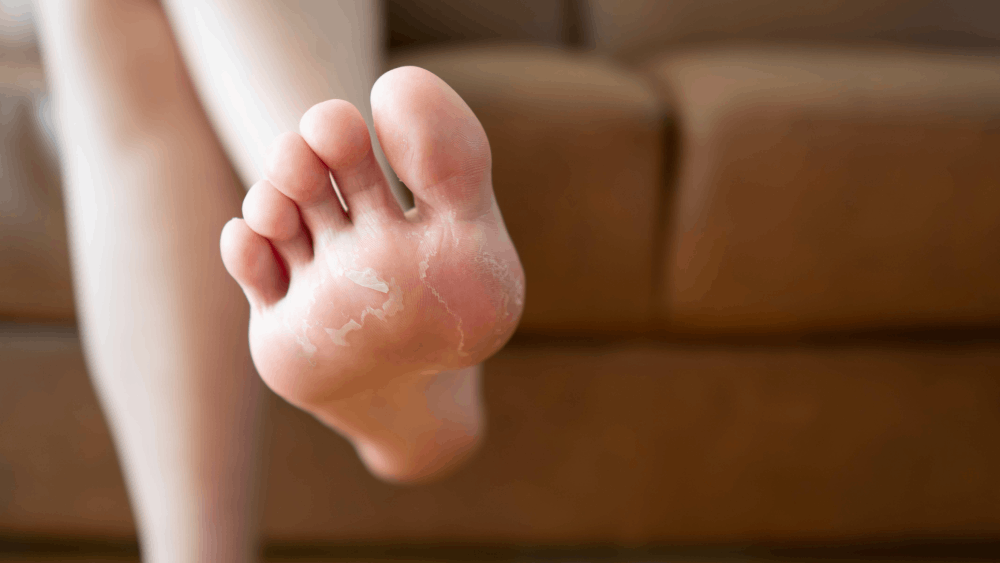
If you notice flaking, cracking, itching, or any changes in your toenails, do not assume it is only dry skin. These can be signs of athletes foot, and the infection will not go away on its own without the correct treatment.
The longer the fungus is left untreated, the deeper it can spread. Over time, it may reach the nail bed or create openings in the skin, allowing bacteria to enter. This can lead to pain, swelling, and sometimes even pus.
Do not wait for the problem to become more serious. Treating athletes foot in the early stages is far easier than dealing with complications later. If something about your feet does not seem normal, speak with your doctor. One simple visit can prevent a long-lasting problem.
Where and How You Can Catch Athlete’s Foot
Fungal spores are everywhere, including in the air, on the floor, inside shoes, and even on your skin. According to microbiologists, a single cubic meter of air can contain as many as two million fungal spores. This may sound alarming, but it is actually a normal part of the environment. For most people, the immune system and healthy skin work very effectively to keep these fungi under control.
In fact, your skin naturally hosts hundreds of species of fungi. They don’t cause problems unless your skin’s barrier is weakened or your immune system is compromised. That’s why walking barefoot at the gym or in a pool doesn’t automatically lead to athlete’s foot. Healthy skin has nearly 80 protective layers, each working to keep invaders out.
What Weakens the Skin’s Defenses?
The trouble starts when that protective barrier breaks down. Here’s what can increase your risk:
- Dry, cracked skin
Tiny cracks from dry skin, harsh pedicures, or overuse of pumice stones can let fungus in.
- Chronic conditions
Conditions such as diabetes, thyroid disorders, varicose veins, or digestive problems can reduce the skin’s ability to retain moisture and fight off infection.
- Lymphedema, obesity, or Down syndrome
These conditions can impair circulation and tissue metabolism, making the skin more vulnerable.
- Excessive foot sweating (hyperhidrosis)
Fungus thrives in warm, damp environments. Constant moisture between the toes creates the perfect breeding ground.
- Tight shoes and synthetic socks
Poor airflow traps heat and moisture, softening the skin and creating ideal conditions for fungal growth.
- Long-term use of antibiotics or immunosuppressant drugs
These can weaken your body’s natural defenses, especially in people with autoimmune conditions or HIV.
- Genetic factors
Some research suggests that certain people are born with skin that’s naturally more susceptible to fungal infections.
In short, it is not only about where you walk barefoot. It is also about the condition of your skin. Keeping your skin strong and healthy is the most effective way to prevent athletes foot from developing.
Why Athlete’s Foot Isn’t Always Easy to Diagnose
In its early stages, athletes foot can look like nothing more than dry skin. It is often mistaken for conditions such as psoriasis, eczema, or a reaction to a new skincare product. The reverse can also happen, since these skin conditions can weaken the skin and make it easier for a fungal infection to develop.
Diagnosing athlete’s foot isn’t always straightforward. Even when the symptoms seem obvious, lab tests don’t always give a clear answer. That’s not because your doctor missed something—it’s because fungi can behave unpredictably.
How Athlete’s Foot Is Diagnosed
The most common test is called a KOH test, in which your doctor scrapes a small sample of skin and examines it under a microscope. It looks for fungal spores and filaments. But even this test has its limits—about 1 in 3 results may come back false negative, meaning the infection is present but the test doesn’t detect it.
Here’s why that happens:
- Fungal spores can live on the skin without causing symptoms, making interpretation difficult. One test alone is not enough. Symptoms, the appearance of the skin, and your medical history all need to be considered as well.
- If treatment has already begun, or if the skin is too thickened, it becomes harder to detect the fungus.
- Multiple types of fungi may be present, but the lab might detect only the one that grows most readily in culture.
This is why a good dermatologist does not depend on a single test. They use a full-picture approach, asking about symptoms, examining the skin and nails, and carefully reviewing laboratory results. In more complex situations, additional tests such as fungal cultures or PCR (polymerase chain reaction) may be needed to confirm what is truly happening.
In short: diagnosing athlete’s foot can take more than a microscope. Trust a doctor who listens, looks closely, and knows when it’s worth testing again.
How to Protect Your Feet from Athlete’s Foot
Fungus thrives in warm and damp environments, which is why sweaty feet are an ideal place for it to grow. Keeping your feet dry is one of the most effective ways to prevent an infection.
Keep Your Feet Dry and Cool
- Wear open-toed shoes in warm weather when appropriate.
- Choose shoes made from breathable materials like leather or fabric—not plastic or rubber.
- Avoid synthetic socks. Go for cotton or moisture-wicking socks instead.
- Change your socks daily—and twice a day if your feet sweat a lot.
- After showering, dry your feet thoroughly, especially between the toes.
- Consider using a foot antiperspirant, such as a cream or powder containing zinc oxide, to reduce moisture.
Don’t Forget About Your Shoes
Even if you’ve cleared a fungal infection from your skin, it can come back from contaminated footwear. Fungus can linger inside your shoes long after your skin looks healed.
- Rotate your shoes and avoid wearing the same pair two days in a row. Give each pair enough time to dry completely.
- Remove insoles and allow shoes to air out. You can use silica gel packs or shoe dryers to speed up the process.
- Use antifungal sprays or powders inside your shoes—especially if you’ve had athlete’s foot before.
- Wash or replace insoles regularly.
- Never wear another person’s shoes, not even for a quick trip outside.
Keeping your feet dry and your shoes clean does not require much effort, but it makes a big difference in preventing athletes foot from returning or appearing in the first place.
How to Protect Your Feet from Athlete’s Foot
Fungi grow best in warm, moist environments, making sweaty feet an ideal place for an infection to begin. The drier your skin stays, the lower your risk.
Step 1: Keep Your Feet Dry and Cool
- Wear breathable shoes in warm weather, like open-toed sandals, when it makes sense.
- Choose shoes made from natural materials like leather or fabric. Avoid rubber or plastic, which trap heat and moisture.
- Avoid synthetic socks and choose cotton or moisture-wicking athletic socks instead.
- Change your socks every day, or more often if your feet sweat heavily.
- After bathing, dry your feet thoroughly, especially between your toes.
- Use foot antiperspirants or powders with zinc oxide to reduce moisture and prevent buildup.
Step 2: Don’t Forget About Your Shoes
Even after your skin clears up, fungus can survive in your shoes and reinfect your feet.
- Rotate your footwear and avoid wearing the same pair two days in a row.
- Remove insoles and let shoes air out. Use silica gel or shoe dryers if needed.
- Spray your shoes with antifungal products, especially if you’ve had athlete’s foot before.
- Wash or replace insoles regularly to prevent spore buildup.
- Never wear someone else’s shoes. Even a quick borrow can transfer spores.
Step 3: Stay Protected in Public Spaces
Athletes foot does not appear out of nowhere, but fungal spores can survive on damp surfaces in shared areas.
- Always wear shower shoes or flip-flops at the gym, pool, or locker room.
- Avoid walking barefoot on tile floors, benches, or bath mats.
- Do not share towels, socks, or personal care items, even with family members.
Step 4: Don’t Treat Your Feet Like Everyone Else’s
Many people believe that any foot cream will work, but if you are prone to fungal infections, the wrong products can actually make the problem worse.
- Urea-based moisturizers can help with dryness, but may cause issues if you have excessive sweating.
- Avoid using thick creams between the toes, since that area needs to stay dry.
- Overusing antiseptics can damage the skin barrier and make you more vulnerable.
- Avoid harsh scrubbing or using pumice stones, since they can damage the protective outer layer of your skin.
- If you have hyperhidrosis (excessive sweating), ask a doctor about prescription-strength foot antiperspirants.
Not sure which products or routine are right for your feet? A dermatologist can help create a plan that fits your skin type, health history, and daily habits. This way, you are not only treating the symptoms but also preventing them from returning.
What to Do If You Think You Have Athlete’s Foot
If over-the-counter creams aren’t helping, that doesn’t mean the infection is untreatable. It just means you might need a proper diagnosis and the right treatment plan. Your first step? Make an appointment with your primary care provider.
What Your Doctor Can Do
- Examine Your Skin and Nails
Your doctor will look for signs of infection, such as cracks, thickened skin, or changes in your toenails, to understand how far it has spread.
- Order a Lab Test
If a fungal infection is suspected, they may take a small skin scraping and send it to the lab to confirm the diagnosis.
- Start Topical Treatment
Most mild cases are treated with antifungal creams, sprays, or powders. If your skin is also itchy or inflamed, your doctor might recommend a combination product with a mild steroid. The treatment depends on how your skin looks and how long the symptoms have been around.
- Prescribe Oral Medication (if needed)
If the fungus has reached the nails or isn’t responding to topical treatment, oral antifungal medication may be needed. Treatment usually lasts anywhere from 2 to 12 weeks, depending on the case.
- Refer You to a Dermatologist
If the infection isn’t clearing up or the diagnosis is unclear, your doctor may refer you to a dermatologist for more specialized care.
Getting help early can save you months of frustration and can also prevent the infection from spreading or becoming chronic. So if you are not sure what is happening with your feet, do not try to figure it out on your own. Let a doctor examine the area and guide you toward the treatment that is right for you.
Why It’s Important to Finish the Full Course of Treatment
In most cases, athlete's foot can be treated effectively with topical medications, and oral pills are not needed. However, timing and consistency are important.
It can be tempting to stop using the cream as soon as the symptoms begin to fade. This is where many people make a mistake. Ending treatment too soon can allow the fungus to return, sometimes even more resistant than before.
Follow the full course of treatment, even if your skin looks better after only a few days. Completing the treatment exactly as directed is the only reliable way to eliminate the infection and reduce the chance of it coming back.